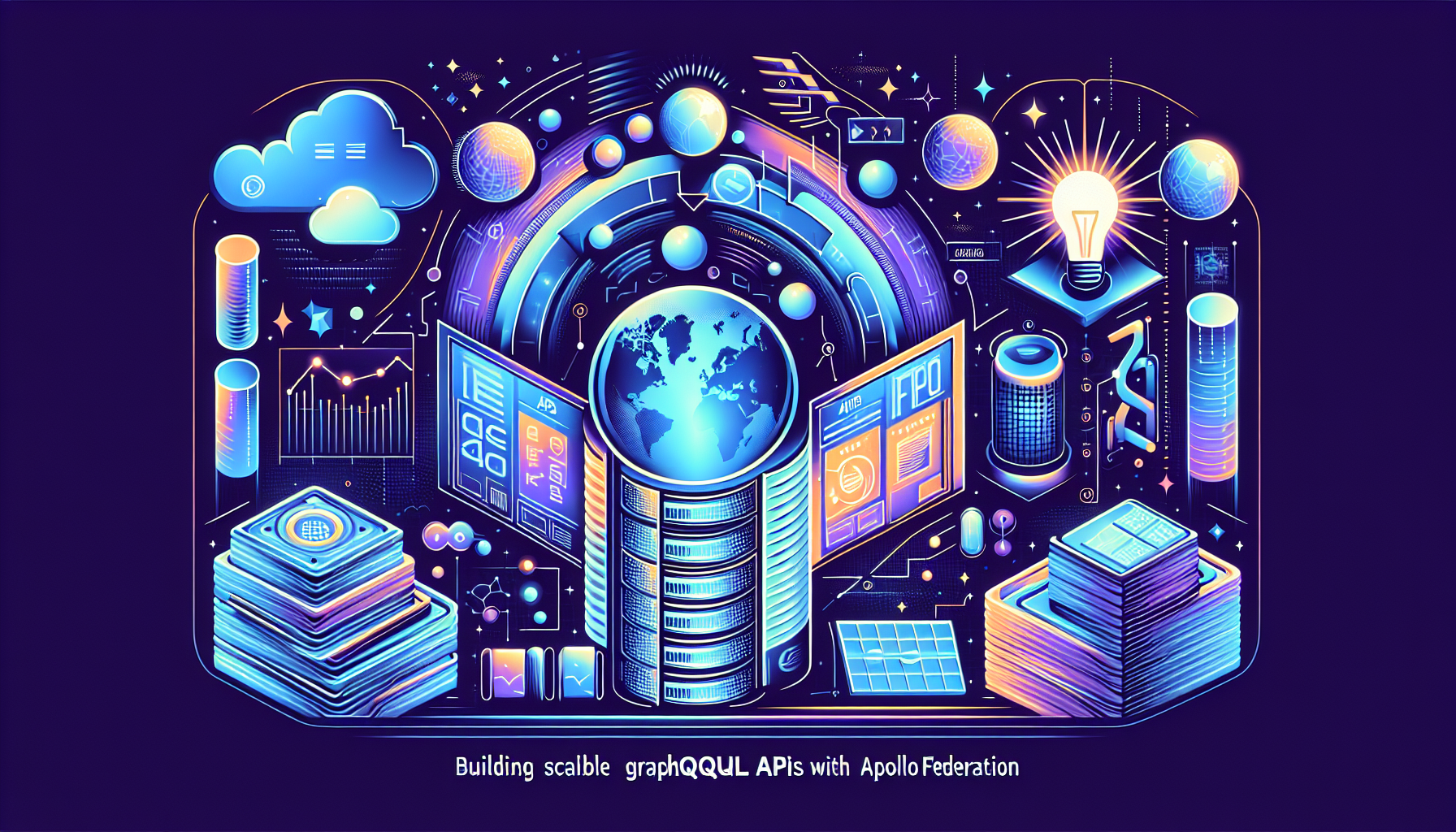

GraphQL has emerged as a popular alternative to REST for building APIs due to its flexibility and efficiency in data retrieval. However, as applications grow, managing monolithic GraphQL servers can become challenging. Apollo Federation offers a solution by enabling the composition of multiple GraphQL services into a single, unified API. This blog explores how Apollo Federation can be leveraged to build scalable and maintainable GraphQL APIs.
Understanding Apollo Federation
Apollo Federation is a powerful architecture that allows developers to compose multiple GraphQL services into a single, cohesive graph. Unlike traditional monolithic GraphQL servers, Apollo Federation enables the distribution of a graph across multiple services, each responsible for a distinct part of the graph. This approach not only enhances scalability but also improves maintainability by allowing teams to work independently on different services.
At its core, Apollo Federation uses a gateway to aggregate the schemas from various GraphQL services, known as subgraphs. These subgraphs can represent different domains of an application, such as users, products, or orders. The gateway handles query planning and execution, ensuring that requests are efficiently distributed across the subgraphs. This architecture is particularly beneficial for software companies and IT consulting firms that manage complex applications with diverse data sources.
Implementing Apollo Federation involves setting up a federated gateway and defining federated schemas for each subgraph. The federated schemas use special directives, such as @key and @requires, to define how entities are resolved across subgraphs. This allows for a seamless integration of data, providing a unified API experience for clients.
Benefits of Using Apollo Federation
One of the primary advantages of Apollo Federation is its ability to enhance the scalability of GraphQL APIs. By distributing the graph across multiple services, each service can be scaled independently based on its load and resource requirements. This is particularly useful for applications with varying traffic patterns, as it allows for more efficient resource allocation and cost management.
Another significant benefit is the improved maintainability of the API. With Apollo Federation, development teams can work on different subgraphs without interfering with each other. This decoupling of services reduces the risk of conflicts and makes it easier to implement changes or add new features. For IT consulting firms, this modular approach aligns with agile development practices, enabling faster iterations and deployments.
Furthermore, Apollo Federation supports a more robust and flexible data model. By allowing different services to own specific parts of the graph, it becomes easier to introduce new data sources or modify existing ones. This flexibility is crucial for businesses that need to adapt quickly to changing market demands or integrate with third-party services.
Implementing Apollo Federation: A Practical Example
To illustrate the implementation of Apollo Federation, consider a software company developing an e-commerce platform. The platform requires a GraphQL API to manage users, products, and orders. Instead of building a monolithic server, the company can use Apollo Federation to create separate subgraphs for each domain.
The user subgraph could handle queries and mutations related to user profiles and authentication. The product subgraph would manage product listings, categories, and inventory. Finally, the order subgraph would handle order creation, status updates, and payment processing. Each subgraph would expose its schema, and the federated gateway would aggregate these schemas into a single API.
Using Apollo Federation directives, the company can define how entities, such as users or products, are resolved across subgraphs. For example, the @key directive can be used to specify a unique identifier for an entity, while the @requires directive can indicate dependencies between fields. This setup ensures that queries are efficiently executed, even when they span multiple subgraphs.
Challenges and Considerations
While Apollo Federation offers numerous benefits, there are also challenges and considerations to keep in mind. One potential challenge is the complexity of setting up and managing the federated gateway. The gateway is responsible for query planning and execution, which can introduce latency if not properly optimized. It’s essential to monitor performance and implement caching strategies to mitigate this issue.
Another consideration is the need for clear communication and collaboration between teams working on different subgraphs. Since each subgraph is developed independently, it’s crucial to establish guidelines for schema design and versioning to prevent conflicts and ensure compatibility. Regular reviews and testing can help maintain the integrity of the unified API.
Security is also a critical aspect when implementing Apollo Federation. With multiple services involved, it’s important to ensure that authentication and authorization are consistently applied across all subgraphs. This may involve setting up centralized authentication services or implementing federated authentication mechanisms.
Integrating Apollo Federation with Existing Systems
Integrating Apollo Federation into existing systems requires careful planning and execution. For companies with existing GraphQL APIs, the transition to a federated architecture can be gradual. One approach is to start by identifying logical boundaries within the current schema and breaking them into separate subgraphs.
For systems that rely on REST APIs, Apollo Federation can be used alongside tools like Apollo Server to create a hybrid architecture. This allows companies to gradually migrate to GraphQL while still leveraging existing REST endpoints. By using Apollo Federation, businesses can achieve a seamless transition without disrupting existing workflows or user experiences.
It’s also important to consider the impact of Apollo Federation on business agility. By enabling a more modular and scalable architecture, companies can respond more quickly to market changes and customer demands. This aligns with the broader trend of digital transformation, where businesses seek to leverage technology to drive innovation and growth. For more insights on how cloud migration can enhance business agility, you can read our blog post on business agility through cloud migration.
Future Trends and Innovations
As the adoption of GraphQL and Apollo Federation continues to grow, several trends and innovations are shaping the future of API development. One emerging trend is the use of AI and machine learning to optimize query planning and execution. By analyzing patterns in query usage, AI can help improve the performance and efficiency of federated APIs.
Another area of innovation is the integration of edge computing with Apollo Federation. By deploying subgraphs closer to users, companies can reduce latency and improve the responsiveness of their APIs. This approach is particularly beneficial for applications with a global user base, as it allows for more localized data processing.
Finally, the rise of serverless architectures presents new opportunities for Apollo Federation. By leveraging serverless functions, companies can build highly scalable and cost-effective GraphQL services. This aligns with the broader trend of moving towards more agile and flexible infrastructure solutions. To learn more about how AI is transforming business operations, check out our article on AI in business operations.
In conclusion, Apollo Federation offers a compelling solution for building scalable and maintainable GraphQL APIs. By enabling the composition of multiple services into a unified graph, it enhances scalability, maintainability, and flexibility. As businesses continue to embrace digital transformation, Apollo Federation will play a crucial role in shaping the future of API development.